

Hognose Care: A Practical Guide to Feeding and Habitat for Beginners and Enthusiasts

Western hognose snakes are small, curious, and full of personality — traits that make them a favorite for new keepers and longtime hobbyists alike. This guide walks through the essentials of hognose care and feeding so you can build a healthy, engaging home for your pet. You’ll find clear advice on enclosure setup, sensible feeding schedules, and how nutrition shapes long-term health. We also cover newer, mess-free feeding options that simplify care while improving hygiene. With the right habitat and diet, your hognose can thrive for years.
Essential Habitat Setup for Western Hognose Snakes
Good habitat design is the foundation of hognose welfare. These snakes do best in enclosures that reflect their natural preferences — stable temperatures, modest humidity, and areas to hide and explore. A thoughtful setup keeps them active, reduces stress, and supports normal behaviors.
Proper housing matters: research shows that inadequate enclosures can limit movement and negatively affect snake welfare, so aim for a setup that lets your snake stretch, thermoregulate, and feel secure.
Pet Snake Housing & Welfare — Key Findings
Keeping snakes as pets is common, but housing and husbandry don’t always meet the animals’ needs. For instance, many captive snakes are housed in conditions that limit their ability to fully stretch or move naturally. Empirical data on captive snake housing and its welfare impacts are limited, so this study surveyed 744 snake owners worldwide to identify common practices and potential welfare issues in private homes. It documents typical housing and husbandry methods and compares responses for the three most common families: Pythonids, Boids, and Colubrids.
A survey exploring the impact of housing and husbandry on pet snake welfare, L Benato, 2022
How to Create a Safe and Hygienic Environment for Hognose Snakes
Start with an appropriately sized enclosure — a secure glass terrarium with a locking lid works well for most hognoses. Keep a regular cleaning schedule: remove uneaten food and waste promptly, disinfect hard surfaces periodically, and replace substrate as needed. Offer multiple hiding spots (rocks, cork bark, or low logs) so your snake can choose privacy and feel safe. Routine care reduces bacteria, prevents odors, and keeps your pet comfortable.
Which Substrates and Temperature Ranges Optimize Hognose Snake Well-being?
Pick substrates that balance cleanliness and comfort. Aspen shavings, coconut fiber, and even paper towels are common choices because they’re easy to spot-clean and let you manage humidity. Provide a thermal gradient so your snake can thermoregulate: roughly 70°F–85°F on the cool side, 85°F–90°F on the warm side, and a basking spot near 90°F. Those ranges let your hognose choose the temperature it needs for digestion, activity, and rest.
Recent work also emphasizes enrichment: substrates and rooting materials can influence behavior and welfare, so adding simple complexity to the enclosure often benefits both physical and mental health.
Western Hognose Enrichment & Husbandry Practices
Interest in snake cognition and welfare is growing, but research is still limited. Studies that examine enrichment in other animals suggest snakes may respond positively to environmental complexity. One dissertation used Western hognose snakes (Heterodon nasicus) as a model to test how environmental and social enrichment affect personality, stability, and brain development. Preference tests showed snakes favored enrichment items — like varied substrate and rooting material — and that preference increased when enrichment was paired with cooler temperatures. Findings are directly relevant to practical husbandry for many hobbyists.
The Effects of Environmental Complexity on Brain Development and Personality Expression in Western Hognose Snakes, G Nagabaskaran, 2026
What Is the Optimal Feeding Schedule and Diet for Hognose Snakes?
Feed hognose snakes according to age and size. Juveniles usually do best on a 4–7 day schedule, while adults can be fed every 7–10 days. Offer appropriately sized rodents (mice are the typical staple) so each meal is no larger than the widest part of the snake’s body. Consistent, correctly portioned feeding supports healthy growth and prevents excess weight gain.
How Does Proper Feeding Impact Hognose Snake Health and Longevity?
Good feeding practices are central to a hognose’s long-term health. A balanced, correctly portioned diet lowers the risk of obesity and nutrient imbalances that can cause digestive, metabolic, or reproductive problems. Learning safe portion sizes, feeding frequency, and when to adjust intake as your snake ages will go a long way toward extending its healthy lifespan.
Nutrition influences every system in the body — from digestion and immunity to behavior — so diet quality and presentation matter as much as quantity.
Essential Nutritional Considerations for Reptile Health
Nutrition affects an animal at every level: selecting and processing food, digestion and absorption, and finally elimination of waste. Adequate nutrition supports growth and maintains cardiopulmonary, digestive, immune, haematopoietic, endocrine, reproductive, and nervous system function. Even an animal’s psychological well‑being in captivity can be linked to what it eats and how food is presented.
Nutritional considerations, 1995
What Are the Health Risks of Traditional Frozen Rodent Feeding?
Frozen-thawed rodents are the standard, but they carry risks if not sourced, sized, or handled correctly. Problems include nutrient gaps from inconsistent diets, meals that are too large for the snake, and the possibility of overfeeding leading to obesity. Proper sourcing, thawing, and portion control reduce these risks — but they require attention and practice.
How Do Nutritionally Complete Feeding Solutions Improve Snake Health?
Nutritionally complete feeding solutions—like those Good Reptiles offers—are formulated to deliver consistent, balanced nutrition without the fuss of thawing and handling frozen rodents. For many owners, these products simplify portioning, reduce contamination risk, and make it easier to maintain a steady feeding routine that supports your snake’s health.
Why Choose Good Reptiles’ Mess-Free Feeding Products for Your Hognose Snake?
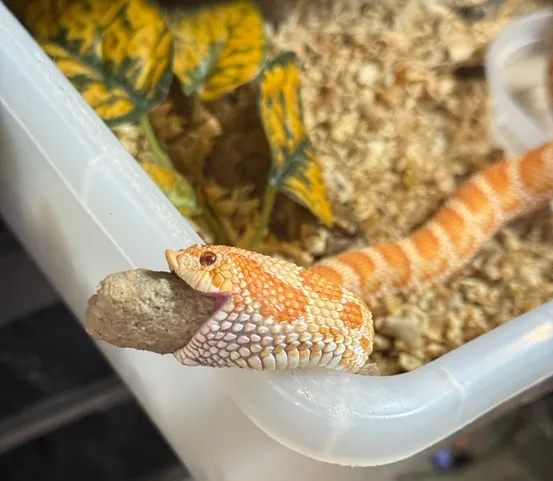
Good Reptiles focuses on practical, science-informed feeding options built for convenience and animal welfare. Their mess-free products give you a nutritionally balanced alternative to traditional frozen prey, designed to make feeding easier while still meeting the dietary needs of hognose snakes.
What Scientific Formulations and Expert Endorsements Support Good Reptiles’ Products?
Formulations from Good Reptiles are developed with input from reptile nutrition experts and reference relevant research to ensure a balanced nutrient profile. That scientific grounding, combined with practitioner feedback, helps the products meet common husbandry needs for growth, maintenance, and overall health.
How Do Mess-Free Alternatives Enhance Convenience and Hygiene for Snake Owners?
Mess-free alternatives remove the thawing and direct handling steps that often complicate frozen-rodent feeding. That lowers contamination risk, shortens preparation time, and simplifies routine care. For many keepers, this means spending less time on logistics and more time enjoying their animals.